May 19, 2026

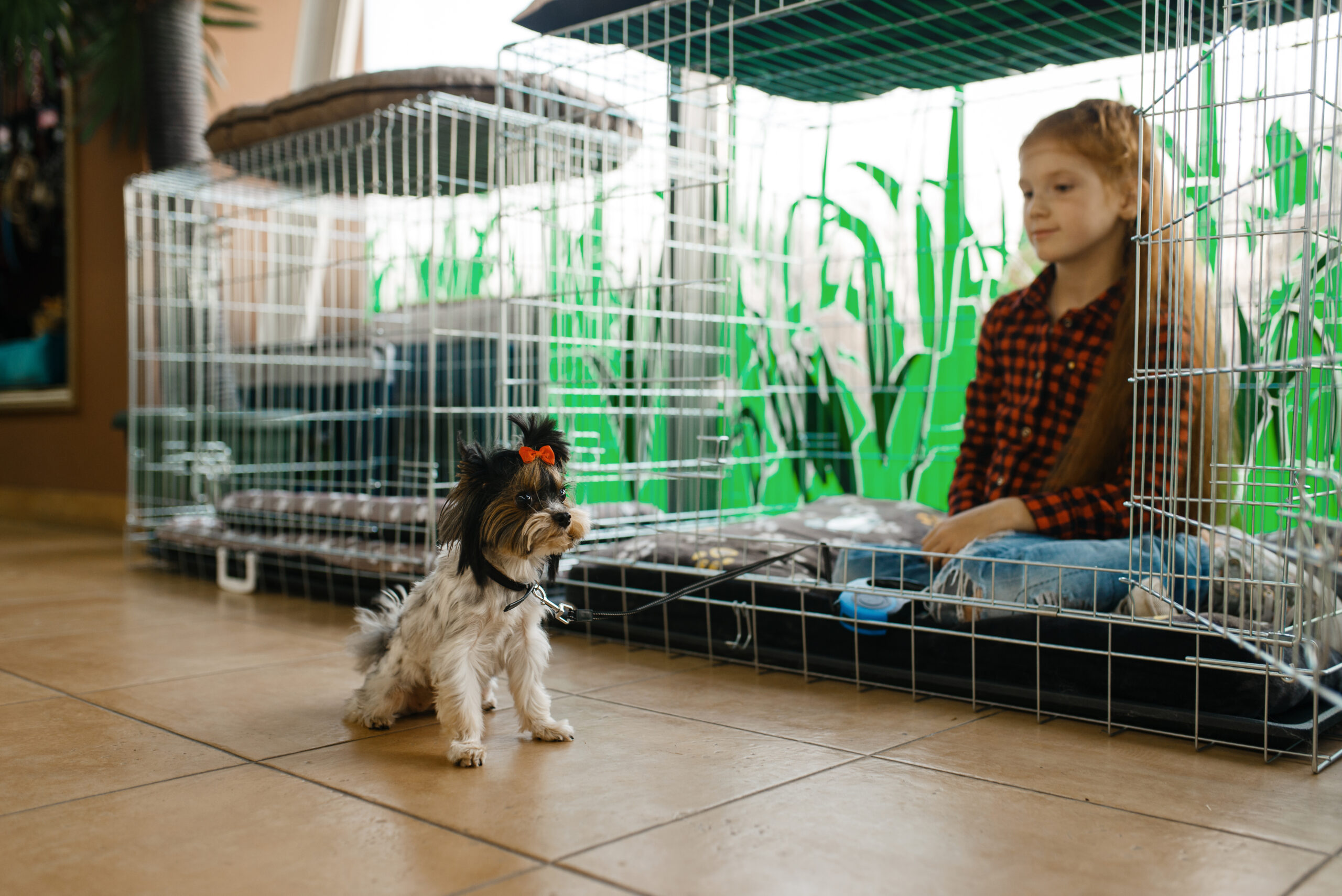
Another effective method of training your furry friend is the crate training technique. With its help, you can calm your pet and show how to control his bowels. Nevertheless, if you are not aware of the main steps of crate training and how to do it right, you may provoke stress in your dog. Therefore, it is crucial to find out about crate training and apply useful advice to perform this action right.
At first, you should buy an appropriate cage or box for your doggy. In fact, you have to choose the right size of the box according to some factors such as the age and breed of your pet. Neither big nor small box suits you since your goal is to make the process comfortable for your pet. To do so, measure your dog in order to find a suitable box where it could stand, stretch, and sit down.
If you cannot choose the box by yourself, ask for professional assistance. It can be either a veterinarian or a dog trainer. Moreover, you have to pay attention to the materials of the crate. The most common ones are metal and plastic. In addition, you should make sure that the box is ventilated in order to avoid changes of temperature.
Another factor to keep in mind is the presence of partitions in the crate. With their help, you will be able to expand the space of the box in accordance with your dog’s growing. Besides, it is desirable to purchase a crate with the removable lid or a door.
Now it is necessary to prepare the box for your pet before placing it into a certain place in your house. Firstly, you have to pick up a suitable place for your doggy where he spends his time with family members, for instance, in the living room. Second, add some things there which can make your pet feel comfortable in the box. In addition, you should put some tasty snacks into the box and let your doggy eat there.
Gradually, you can start closing the box for a couple of minutes, staying near him all the time. Then you have to increase the time step by step until you notice that your dog feels fine there. Do not hurry with crate training your furry pet as it may affect negatively.
It is crucial to establish a routine to train your pet to stay in the box. At first, you should feed your dog in the box and use such a phrase as “go potty”. Thus, you can teach your dog what for he has to go into this box. Besides, you have to walk your doggy or play games with him. Moreover, remember that crate training will require a lot of your time.
While picking up the position of the box, you have to consider some peculiarities. For example, the box can be placed either in the corner of the room or in front of the sofa or behind the screen or somewhere else. However, you should make sure that your dog feels comfortable there and does not become upset. Place the crate far from a noisy street and some distractive elements.
In addition, it is necessary to supervise your doggy while training him in a box in order to be aware of the dog’s feelings. Avoid letting your furry friend suffer as a result of crate training.
If you own a small dog, you have to pay attention to some peculiarities of his crate training. Being small-sized pets, they require careful approach while being trained. At first, you should start the procedure with the smallest box and then gradually transfer it into a larger box.
Besides, you should do your best in order to ensure that your small dog feels convenient during training. For example, you can put his favorite cozy bed there. Moreover, remember that you should organize many times for potty.
As to large-sized dogs, it is also required to pay attention to many aspects. For example, your doggy may feel uncomfortable and stressful in a small crate. In this case, you should start from the bigger box or a pen. Gradually, you can enlarge the size of the cage and use partitions to make its space bigger.
What is more, remember that your dog needs more exercise and activity, otherwise, your pet may feel depressed and frustrated.
Puppies are quite small dogs, and you have to be especially careful while training them in the box. Start from small-sized boxes or playpens and gradually go to larger ones. Remember that puppies need lots of time for potty training, and the crate training will help you to arrange it.
It is obvious that there are some behavioral issues in dogs which can be solved with the help of a box. On the one hand, crate training helps a doggy to become calmer and happier, especially in case he suffers from separation anxiety. On the other hand, the box serves as a tool to prevent your dog from some negative habits. For example, he can become a chewer which needs to be stopped.
As to procedures of training, they are almost the same. The only thing you have to take into consideration is increasing the time spent in the crate gradually.
Sometimes you can decide to take your dog with you on the long travel. Under these conditions, you have to keep him comfortable. That is why crate training can become an efficient way to cope with this problem.
It is advisable to choose a special crate which will fit a car and can be easily installed there. Once you arrive home, place the box on the floor or somewhere else and start crate training your puppy gradually.
Crate training is a highly effective method for housebreaking, calming anxiety, correcting behavioral issues like destructive chewing, and ensuring safe travel. However, a successful and stress-free process requires a patient, gradual approach tailored to the dog’s age and breed size. Owners must carefully select a well-ventilated crate of the correct size (utilizing dividers for growing dogs), create a comfortable environment in a central yet quiet location, and establish a consistent routine based on positive reinforcement and close supervision.